What is a Chief AI Officer?
A plain answer to what the role owns, who it reports to, and how it differs from your CTO. Written by someone who holds the seat for a living rather than someone selling a course about it.
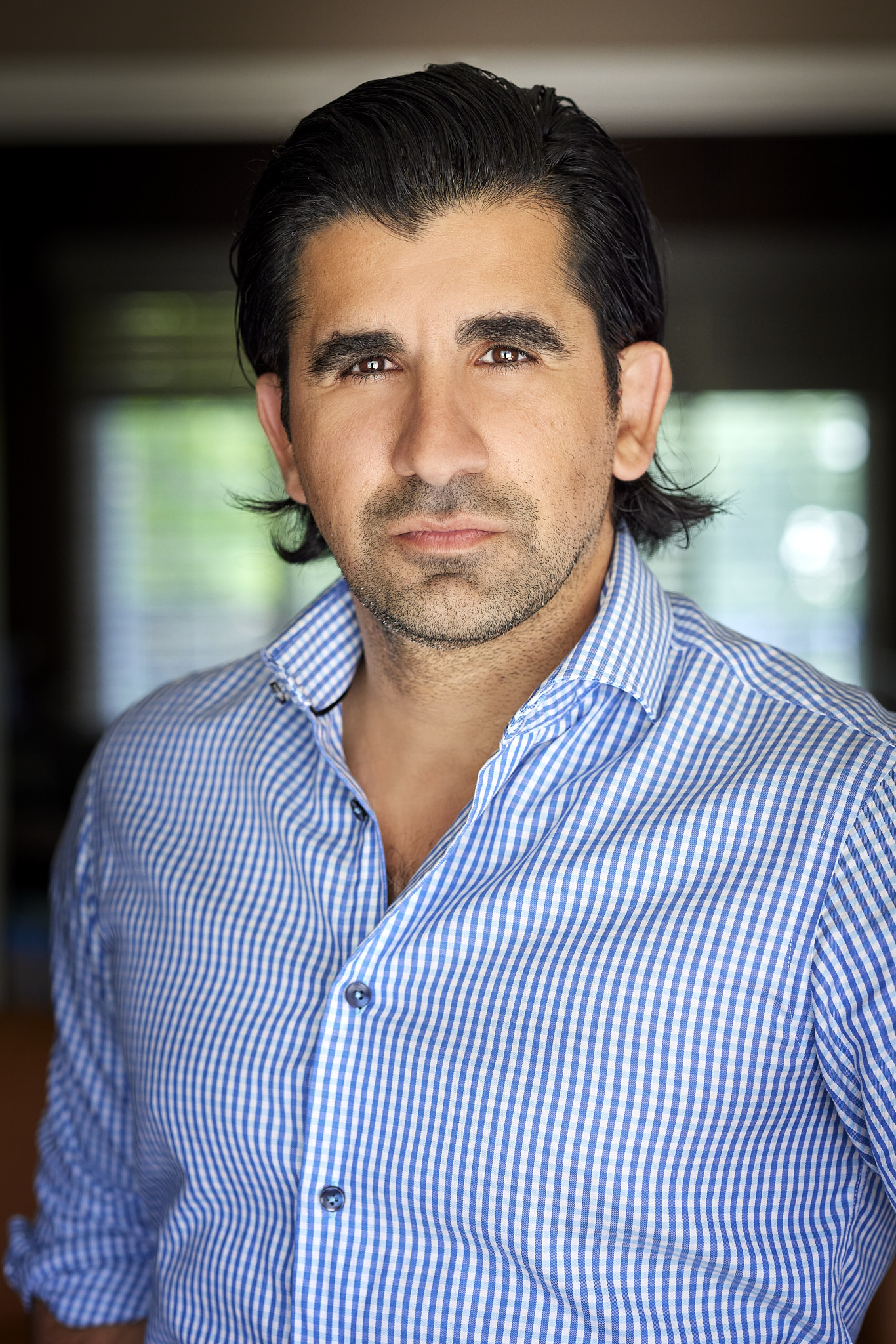
One executive, accountable for AI.
A Chief AI Officer (CAIO) is the senior executive who owns a company's entire AI agenda: the strategy and where the money goes, the governance and risk posture, the portfolio of use cases, the AI organization, and the answer the board gets when it asks what the investment returned.
The role exists because AI kept falling between chairs. It's too cross-functional for the CTO, whose mandate is the technology stack; too operational for the CDO, whose mandate is the data underneath it; and too consequential to leave with whichever VP happened to be enthusiastic. Surveys put most CAIOs reporting to the CEO, with the rest split between the CTO or CIO and the COO.
It went mainstream fast. IBM's 2026 CEO study found 76% of surveyed organizations now report having a Chief AI Officer, against 26% a year earlier. The interesting part isn't the growth. It's that most of those seats were created after the first round of AI spending failed to show up anywhere in the P&L.
Not every company needs the seat filled five days a week. Plenty need it filled two, or filled full-time for six months while the operating model gets built. The shape matters less than the accountability.
Also known as: CAIO, Chief Artificial Intelligence Officer, head of AI, AI executive, VP of AI (at smaller scale).
What a Chief AI Officer does.
AI strategy & portfolio
Deciding which AI investments get funded, in what order, with a business case each. And which ones get killed, which is the harder half.
Governance & risk
An auditable inventory of every AI system, risk classification against ISO/IEC 42001, the NIST AI RMF and the EU AI Act, an acceptable-use policy, and a review body with the authority to stop a launch. Folded into the SOC 2, ISO 27001, HIPAA and GDPR obligations the company already carries.
Automation across the business
Getting AI out of pilots and into purchasing, service, marketing, sales, production, logistics and engineering, with evaluation and cost control attached.
Data readiness
Working with the data function on what the data can actually support today, and which favourite use case is quietly blocked until that changes.
People & AI literacy
Hiring the AI-capable roles, training everyone else, and making the sanctioned path better than the shadow one.
Board reporting
Translating an AI program into numbers a board can act on: cost per outcome, adoption, risk retired, and what was abandoned.
CAIO, CTO, CDO.
Three roles that overlap enough to cause arguments and differ enough to matter. Read them as three job descriptions rather than three hires: I hold the CAIO and CTO seats together, which is how most mid-market companies should be thinking about it.
The functions AI runs on
- , CTO: the whole technology function, engineering, infrastructure, delivery, the stack
- , CDO: the data foundation, governance, quality, privacy, architecture
- , Both are accountable for a function and its systems
- , Neither role was scoped for AI-specific risk or cross-departmental adoption
AI as a discipline, company-wide
- →Owns AI everywhere it appears, including in departments outside engineering
- →Owns AI-specific risk: model behaviour, evaluation, regulatory classification
- →Owns the portfolio and the capital allocation behind it
- →Accountable for whether the AI investment produced a measurable result
When a company actually needs one.
Four conditions show up again and again in the companies that end up creating the seat. Two of them usually appear together.
Shadow AI is spreading
Employees are using AI tools nobody approved, often with customer data in them. Surveys consistently find well over half of workers doing this, and no one can produce the list.
See: AI governance & riskPilot purgatory
Proofs of concept everywhere, production traffic nowhere. MIT's 2025 NANDA study found 95% of generative AI pilots produced no measurable P&L impact, and the cause was integration and ownership rather than model quality.
No single owner
AI decisions are spread across IT, data and the business units. Everyone has an opinion and a budget line, so the expensive calls, build-vs-buy, vendor consolidation, what to stop, never get made.
Regulatory exposure
Enterprise customers are sending AI questionnaires, auditors are asking about model risk, and the EU AI Act's transparency duties are already live. Somebody has to sign the answers.
A firm's AI practice, or one operator?
Both exist and both get sold as a Chief AI Officer. They behave differently once the contract is signed, and the difference is worth understanding before you shortlist.
Bought from a partner, delivered by a team
- , The senior person you assess is rarely the person doing the work
- , Delivery staffed from whoever is free that quarter, and rotated
- , Methodology is the product, so the output is documents
- , The capability stays with the firm, which needs the next phase
- , Scales to any size, which is genuinely useful at enterprise scale
Bought and delivered by the same person
- →The judgment you evaluated is the judgment you get, every week
- →Works with the team you already have, and hires the gaps into your org
- →Output is decisions made and systems shipped
- →The capability is transferred, so the engagement is built to end
- →Capacity is the real limit, so availability is a genuine constraint
The Chief AI Officer, explained.
What is a Chief AI Officer?
A Chief AI Officer (CAIO) is the senior executive accountable for a company's entire AI agenda: AI strategy and investment, governance and risk, the portfolio of use cases, the AI organization, and reporting to the board on what the investment returns. The role exists because AI decisions cross every department, which makes them nobody's job by default.
Who does a Chief AI Officer report to?
Most commonly the CEO, which is the arrangement that works best when AI touches operations outside engineering. The next most common lines are the CTO or CIO, then the COO. The reporting line matters less than the mandate: a CAIO without authority over spend and over what ships is a coordinator with an impressive title.
How is a Chief AI Officer different from a CTO?
A CTO owns the technology function: engineering, infrastructure, architecture and delivery. A Chief AI Officer owns AI as a discipline across the whole business, including departments that never reported to engineering, plus the AI-specific risk and governance a CTO role was never scoped for. Many companies need both jobs done. Fewer need two executives to do them, which is where my own situation is relevant: I hold both seats, twenty-five years as a CTO alongside the CAIO mandate. That doesn't replace a CTO or Director of IT you already have; it takes the AI job off their plate. And it collapses the usual hand-off, because the strategy call and the architecture call happen in the same head on the same afternoon.
How is a CAIO different from a Chief Data Officer?
The CDO owns the data foundation: governance, quality, architecture and privacy, the work that makes data trustworthy and available. The CAIO turns that data into outcomes and owns the risk of doing so. The CDO makes the data dependable; the CAIO decides what it's worth building on and is accountable for the result.
Do we need a full-time CAIO, or is fractional enough?
Fractional suits companies where AI matters strategically but doesn't fill five days a week, where the operating model needs building before an honest job description can be written, or where the seat has to be filled this month rather than after a four-to-eight-month search. Full-time suits companies where AI is the product, where the AI team is big enough that somebody has to run it every day, or where a regulator expects a named accountable executive on staff.
What does a Chief AI Officer cost?
In the US, full-time base salaries run roughly $280,000 to $650,000, with bonus targets commonly 30–60% of base and equity on top. Fractional retainers in the open market run about $5,000 to $30,000 a month depending on days and seniority. My own published numbers are a fixed-fee AI Diagnostic from $20,000, then $10K, $18K or $30K a month by commitment. There's a full breakdown at /chief-ai-officer-cost.
What should a CAIO deliver first?
In order: a complete AI inventory including shadow AI, a data readiness read, and a ranked portfolio of automations with a business case each. Then governance, meaning policy, a review body and risk classification against frameworks like NIST AI RMF and the EU AI Act. Then one automation live in a real function with a measured result attached, plus a rolling roadmap and a board pack covering what was funded, killed and returned. Be wary of anyone who commits to that on a fixed calendar before seeing the estate.
Should we hire an individual or a consulting firm?
A firm gives you scale and a bench, which matters at enterprise size or when several workstreams run at once. An individual gives you continuity: the person you assessed is the person in the room every week, the capability transfers to your own team, and there is one name against the outcome. For most companies in the $10M–$50M range the second is the better trade, because the constraint is judgment rather than hands. The honest cost is capacity, since one operator can only hold a few engagements at a time.
How should a fractional or interim CAIO engagement end?
With the company able to run the program itself. A good engagement ends in a handover rather than a renewal: the AI capability is transferred to a team that either gets recruited for the purpose or trained out of the existing staff, and the departing executive stays reachable for the genuinely hard questions afterwards. If an engagement has no defined exit, what you have bought is a dependency rather than a capability.
Isn't this just a rebranded AI consultant?
The difference is accountability. A consultant delivers a recommendation and leaves; the CAIO holds the seat, controls the budget, signs off on what ships, and answers for the outcome. The distinction shows up when something goes wrong, which is the only moment it really matters.
Related reading & paths.
What a Chief AI Officer costs
Full-time salary bands, fractional retainer ranges, and my published numbers side by side.
Fractional vs interim vs full-time
Which shape of the seat your company needs right now, including when the answer is none of them.
CAIO vs CTO
Which seat owns AI at your company, and what breaks when the answer is "both, sort of".
Fractional CAIO services
The engagement itself: what I own, how the phases run, and the published price.
AI Governance & Risk
The inventory, the policy and the controls mapped to NIST AI RMF, ISO 42001 and the EU AI Act.
AI Innovations by Industry
AI applications and agent systems designed across industries, some shipped, some blueprints.
Who should own AI?
Six candidates for the job compared honestly, including where a CAIO gets it wrong.
Think you might need
a Chief AI Officer?
Tell me where AI has stalled. I'll tell you honestly whether this seat is the answer, and whether I'm the right person to fill it.