The Chief AI Officer seat, full-time.
When AI is central enough that part-time won't hold it, I take the seat outright. I build the AI operating model, the governance, the team and the first production systems, then recruit the permanent CAIO and hand them a working program rather than a mandate.
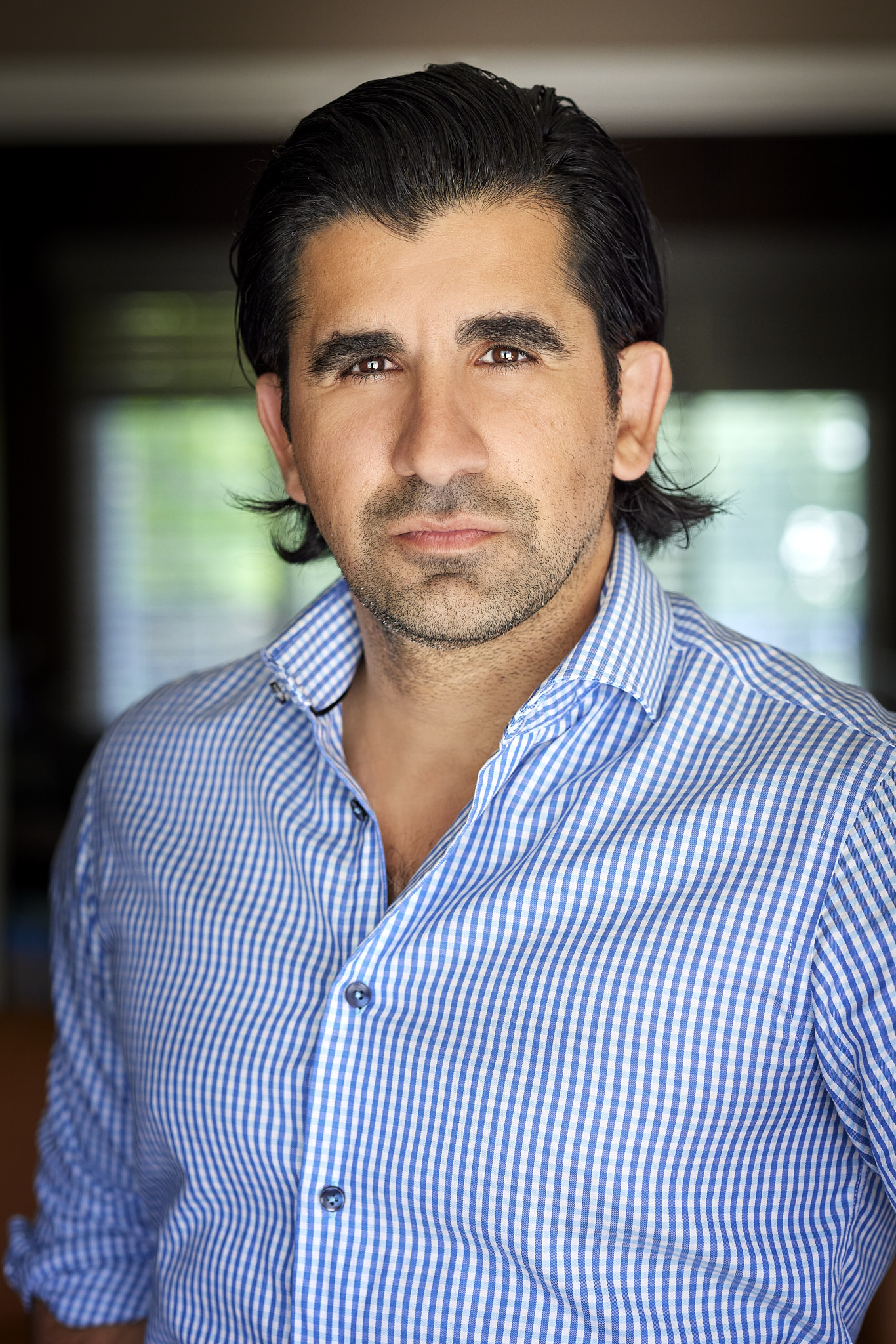
When you need the whole executive.
A full-time Chief AI Officer owns AI as a discipline across the entire business: the strategy and the spend, the governance and the risk register, the portfolio of use cases, the AI organization, and the board conversation about all of it. Most companies in the $10M–$50M range don't need that seat filled full-time. Some do, and the ones that do usually know it, because AI has become either the product or the largest single source of risk.
Hiring for it is genuinely hard. Base salaries in the US run $280K–$650K, the candidate pool is thin, and a search commonly takes four to eight months. Worse, most companies write the job description before they understand the job, then hire against a spec that turns out to be wrong on contact with their own data and their own regulators.
So I offer the seat two ways. I take it full-time for a defined stretch and build the thing properly, which is the same shape as my last operating role: I ran product, engineering and AI transformation for an online learning platform as its CPTO. Or I run the search and technical assessment for your permanent hire, with 30+ companies' worth of team-building behind the vetting. Frequently it's both, in that order.
Either way you are hiring a person, not a supplier. No firm sits behind this, so there is no partner who sells the work and a delivery team who inherits it, and nothing about the arrangement is built to outlive my usefulness. I run the function with the people you already have, and the last thing I do is make the seat someone else's.
Also known as: permanent CAIO, head of AI, Chief Artificial Intelligence Officer, executive AI leadership.
What the full seat covers.
Everything the fractional engagement covers, plus the parts that only work when someone is present every day.
Enterprise AI strategy
One plan across every function, sequenced by value and dependency, with the investment cases and the kill list that goes with it.
Governance & regulatory
The inventory, the review board, and one control set across ISO/IEC 42001, the NIST AI RMF, the EU AI Act and OWASP's LLM Top 10, folded into your SOC 2, ISO 27001, HIPAA, GDPR and PCI DSS obligations rather than run beside them.
The AI organization
Designing and hiring the AI function: engineers, data, evaluation and the product people who know what to point it at. Then running it.
Automation across every function
Purchasing, customer service, marketing, sales, production and logistics rebuilt around AI, plus engineering where you have it. Where you don't, I recruit the engineers.
Company-wide AI literacy
The training, the usage policy and the internal tooling that make AI a normal part of how people work instead of a shadow economy.
Board & investor reporting
A quarterly account of what was funded, what shipped, what returned and what was retired, in language the board can act on.
Take the seat, or fill it.
Both routes end in the same place: a permanent Chief AI Officer running a program that already works.
I hold the seat
Full-time as your CAIO for a defined stretch, typically six to twelve months. I build the operating model, the governance and the first automations across the business, run the AI function, and carry the board relationship. The engagement ends in a planned transition rather than a resignation.
I hire the seat
I scope the role against your actual constraints, then run the technical assessment for candidates: architecture judgment, governance literacy, and whether they've ever shipped AI that took real traffic. Résumé screening finds none of that.
Both, in order
I take the seat, build the program, then write the job description I wish I'd been given and hire my own successor. The candidate walks into a working inventory, a live roadmap and a team that knows what it's doing.
Full-time, or fractional first?
The honest version, including the cases where I'd tell you not to hire me full-time.
Right when AI is the company
- , AI is the product, or the primary regulatory exposure
- , The AI function is large enough to need daily management
- , A regulator or major customer expects a named accountable executive on staff
- , You can carry $400K–$900K all-in and wait out a four-to-eight-month search
Right for almost everyone else
- →You need the operating model built before you can write an honest job spec
- →AI matters strategically but doesn't fill five days a week yet
- →You need someone in the seat this month, not next fiscal year
- →You'd rather test the scope for two quarters than hire against a guess
A track record, not a pitch.
Most failed CAIO hires were doomed at the job description. The company wrote a spec for the AI program it imagined having, then hired someone brilliant at a job it didn't have.
About the full-time seat.
What does a full-time Chief AI Officer do?
A full-time Chief AI Officer owns AI as a discipline across the whole business: strategy and spend, governance and risk, the portfolio of use cases, the AI organization, and reporting to the board. Unlike a CTO, whose mandate is the technology function, the CAIO's remit crosses every department, including ones that don't report to engineering. Surveys put CAIO reporting lines mostly with the CEO, then the CTO or CIO.
Are you available for a full-time CAIO role?
For a defined stretch, yes. I take the seat full-time, typically six to twelve months, build the AI operating model, the governance and the team, then hire and hand over to a permanent Chief AI Officer. My most recent operating role was full-time as CPTO of an EdTech platform, leading product, engineering and its AI transformation.
What does a full-time Chief AI Officer cost?
In the US, base salaries run roughly $280,000 to $650,000, with bonus targets commonly 30–60% of base and equity on top, so all-in packages of $400,000 to $900,000 are normal at mid-market and enterprise scale. Add a search that typically takes four to eight months. A full breakdown, alongside fractional and interim retainers, is at /chief-ai-officer-cost.
Why hire an individual rather than a consulting firm?
A firm sells you a partner and staffs the delivery to whoever is available, which is how AI programs end up run by people who have never shipped one. Hiring an individual means the judgment you evaluated is the judgment you get every day, and it means the capability transfers to your team instead of staying with a vendor who needs you to keep buying. The limit is capacity: one person can hold a small number of engagements, so availability is a real constraint rather than a sales tactic.
Should we hire a CAIO or give AI to our CTO?
There is a third answer that most companies miss, and it's the one I'd point you at: one person holding both. I've been a CTO for twenty-five years and I hold the CAIO seat now, so the choice doesn't have to be made. That is not a replacement for your CTO, your VP of Engineering or your Director of IT; they keep their jobs and stop being handed a second one labelled AI. If you do have to choose: give AI to the CTO when it is essentially an engineering capability, the exposure is contained, and they have the bandwidth plus an explicit mandate with budget. Hire a separate CAIO when AI decisions span functions the CTO doesn't own, when AI-specific risk needs a named owner, or when the CTO is already fully occupied keeping the platform alive. The failure mode is the middle: nominally the CTO's job, actually nobody's.
Can you help us hire our permanent Chief AI Officer?
Yes. I scope the role against your real constraints rather than a template, then run the technical assessment: architecture judgment, governance literacy, evaluation and cost discipline, and whether the candidate has shipped AI that carried production traffic. Building the team has been part of the CTO job at most of the 30+ companies I've served, and I interview candidates personally.
What happens when the engagement ends?
A planned handover, agreed at the start. The successor inherits a documented inventory, a live roadmap, a working governance layer, open risks with reasoning attached, and an overlap period with me. Then I taper to advisory rather than disappearing. No permanent dependency, in either direction.
Related reading & paths.
Fractional Chief AI Officer
The part-time version, and the one most $10M–$50M companies should start with.
What a Chief AI Officer costs
Full-time salary bands, fractional retainers and my published numbers, side by side.
Technical Recruitment
How I hire technology and AI leaders: org design first, every candidate vetted personally.
Four ways out,
all of them yours.
Even a full-time seat should not depend on its first occupant. I build the function to outlive me: documented, staffed and transferable on a timeline you control. You are never stuck with me.
Hand it to your team
The team, the governance register and the operating rhythm are built to run under whoever holds the seat next. Nothing lives only in my head, because that would be a dependency dressed up as an executive.
I recruit my successor
When the program matures past needing me, the recruiting mandate turns inward: I scope the seat as it actually exists, interview the candidates myself, and hand my successor a working function rather than a job description.
I train the person you already have
Often the strongest path: a COO, CTO or director of IT who has co-run the portfolio with me for a year takes the seat with no search at all. I stay behind them until the hard calls stop feeling hard.
I stay, for as long as it's useful
The seat stays filled while the agenda earns its keep, reviewed like any other executive role: against the P&L, on a cadence the board sets.
Need the seat filled
properly?
Tell me what AI has to deliver and who it has to answer to. I'll tell you whether that's a full-time hire, an interim, or something smaller than you think.