Fort Lauderdale
Florida, United States
The US office, and the one most engagements run out of.
Open in Maps ↗Most AI consulting ends at the recommendation. Mine ends when the system is running, the unit cost is known, and someone on your payroll can keep it alive. Twenty-five years building software organizations, now spent making AI pay for itself.
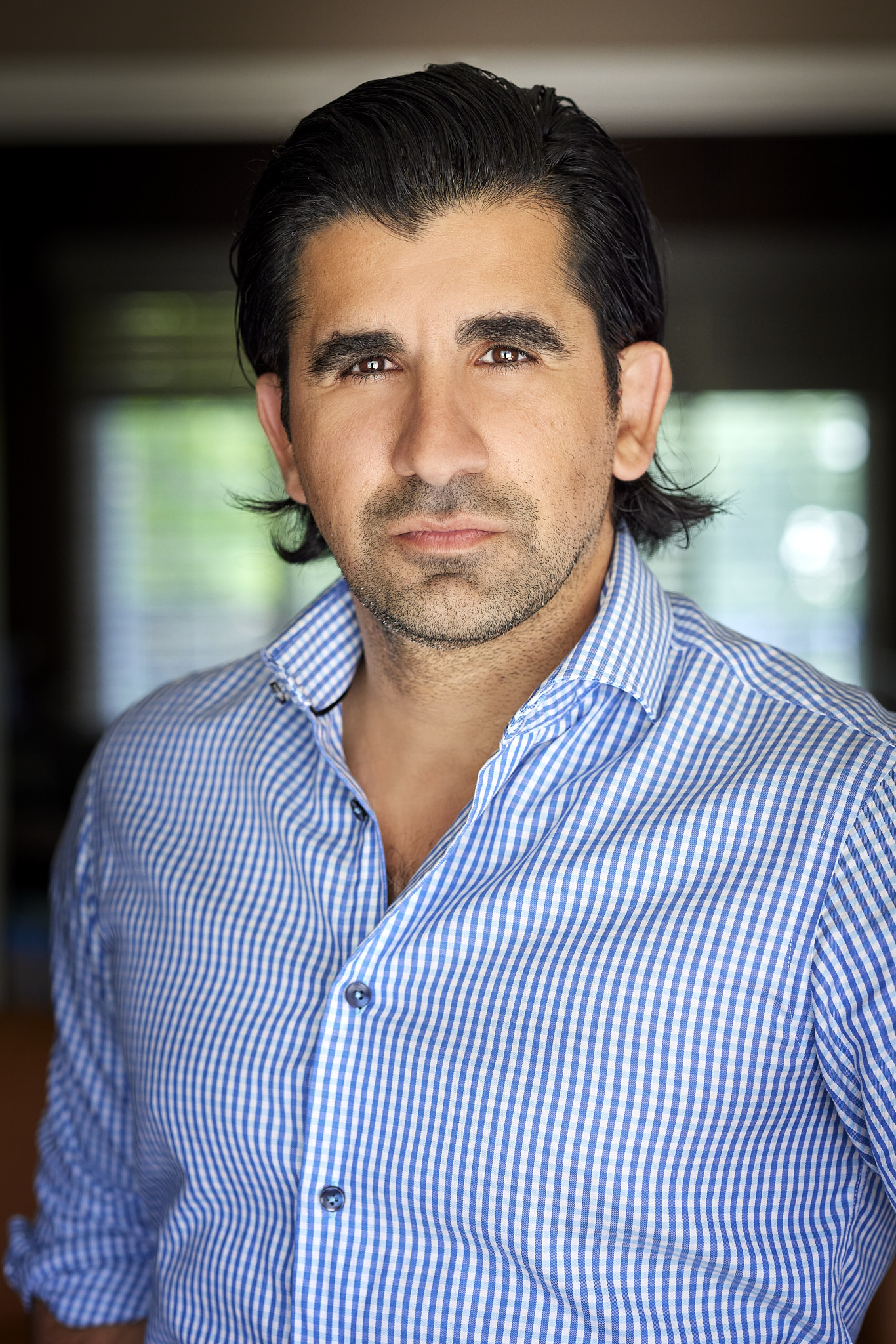
An AI consultant works out where artificial intelligence is worth your money, and then makes that real. The first half is analysis: which workflows are worth automating, what your data can actually support, what the whole thing costs to run once the novelty wears off. The second half is the part most engagements skip. Somebody has to build it, evaluate it, and hand it to a team that can keep it running.
I do both halves. AI consulting services get sold under a dozen labels, and the label rarely tells you what you're buying. An AI strategy consultant writes the plan. An AI implementation consultant builds against someone else's plan. An AI transformation consultant talks about the org chart. I'm a Chief AI Officer who takes the whole arc: the plan, the architecture, the build, and the operating change that makes it stick. Work like the hybrid AI and human workflow platform shipped that way, with one person accountable from the first meeting to the last deploy.
The practice is remote-first, with offices in Fort Lauderdale and Montreal. I serve companies across the United States and Canada from Eastern Time. That is close enough to both coasts that a decision made in the morning does not wait until tomorrow.
Also known as: AI consulting services, AI consulting firm, AI consulting firms, AI consulting company, AI consulting companies, AI consulting agency, AI business consulting, artificial intelligence consultant, AI advisor for business, AI strategy consultant, AI implementation consultant, AI transformation consultant.
The symptoms differ. Underneath, it's almost always the same gap: plenty of AI activity, nobody senior accountable for the outcome.
Something works in a demo and has worked in a demo for eight months. Nobody can name what's blocking production, so the answer is another pilot.
Four quotes for what sounds like the same system, ranging from $30K to $600K. You have no way to tell which one is serious.
Licenses in every department, three teams building similar things, and no view of what any of it changed.
You're asked about AI every quarter. The honest answer is a copilot subscription and some enthusiasm, and everyone in the room knows it.
Every one of these is a document or a running system, written specifically enough to be argued with.
Whether your data, systems and team can support what you want to build, and what has to be fixed first.
Every candidate scored on value, feasibility and risk, with the weak ones killed on paper before they cost you a quarter.
Cost to build, cost to run, and the value on the other side, in the format your CFO already reviews.
Which models, which vendors, what stays in-house, and the evaluation harness that keeps it honest after launch.
Usage policy, data boundaries, review gates and an owner for each. Light enough that people follow it.
I lead delivery, hire and upskill the team, and stay until the system runs without me in the room.
Both are legitimate. They fail in different places, and the difference matters more at your size than at enterprise scale.
Twenty-five years of it, most as the executive accountable for the outcome.
The right question for an AI consultant isn't what should we build. It's what you'll still be running, and paying for, two years from now.
Start narrow. Almost everyone begins with the diagnostic, and roughly half of those continue into delivery.
Two to four weeks, fixed fee. An inventory of what's already running, a data readiness read, a ranked use-case portfolio with business cases, and a sequenced plan. Yours whether or not we work together again.
About a day a week. For teams that can build but keep making expensive decisions alone: model choice, vendor contracts, architecture, the calls that are hard to reverse.
Two days a week, owning strategy, governance, the portfolio and the build. Most of these run six to eighteen months.
Three or more days a week, for a company where AI has stalled, the risk exposure is live, or the permanent hire hasn't landed.
Most AI consulting firms will not quote until the third call. I publish my numbers so you can decide whether to bother with the first one. All prices USD.
Where AI pays in your business, what it costs, and what to do first. The best possible first engagement, and the one I recommend to almost everyone.
Senior judgment on the roadmap, build-vs-buy, vendor calls and governance, without the full seat.
The whole engagement: strategy, governance, portfolio and build, owned end to end and hands-on.
Near-full-time in the seat when the situation is urgent or the permanent hire is months out.
Fixed-scope alternatives: a readiness assessment, an opportunity assessment, or governance foundations, each quoted to scope. Market context: what AI consultants charge, explained. Email me ↗
Fort Lauderdale for the US market and Montreal for Canada. If you're searching for an AI consultant near you and you're anywhere in either country, this is the practical answer.
Florida, United States
The US office, and the one most engagements run out of.
Open in Maps ↗Quebec, Canada
The Canadian office, and where the practice started in 2018.
Open in Maps ↗Engagements run remotely by default and I travel for the sessions that genuinely need a room: the kickoff, the executive workshops, the difficult conversations. Both offices keep Eastern hours, so a client in Seattle and a client in Toronto get the same working day.
An AI consultant identifies where artificial intelligence creates measurable value in a business, decides what to build or buy, and makes sure the result works in production. In practice that means auditing what you already run, assessing whether your data and systems can support the ambition, ranking use cases by value and feasibility, building the business case, choosing the architecture and vendors, and setting the governance around it. I also lead the delivery, which is the part most consulting engagements hand back to the client.
In the US market, independent AI consultants typically charge $200 to $500 an hour, boutique firms quote $25,000 to $150,000 for a defined project, and the large consultancies routinely price AI strategy work into six or seven figures. My own pricing is published and fixed: a diagnostic from $20,000, advisory at $10,000 a month, the fractional Chief AI Officer seat at $18,000 a month, and interim coverage at $30,000 a month. All prices are USD.
Write down the business outcome you want before you talk to anyone, then ask every candidate the same three things: what they would need to see in your data before committing to that outcome, what the system will cost to run per month at your volume, and who owns it after they leave. Ask for one engagement they would not take. Consultants who only sell upward will struggle with that question. Then start with a small fixed-scope piece of work rather than a retainer.
I keep offices in Fort Lauderdale, Florida and Montreal, Quebec, and I work with companies across the United States and Canada. Both offices run on Eastern Time, which covers the whole continent inside one working day. Searches like AI consulting near me, AI consulting firms near me and AI business consultant near me tend to assume this work is local, and for the most part it no longer is: the practice is remote-first, with travel for kickoffs, executive workshops and the sessions that genuinely go better in a room. If proximity matters to you for a specific reason, say so and I will tell you honestly whether it changes anything.
A firm gives you scale, a bench of specialists and a brand your board recognizes, and you usually pay for a partner who sells and a delivery team you meet later. An independent gives you one senior person, directly, at a fraction of the cost, with limited surge capacity. For a mid-market company running its first serious AI work, the constraint is almost never delivery hours. It's judgment, and judgment does not come from the bench.
Both, and I prefer not to split them. I write the strategy as the person who will build it, which changes what gets written: every recommendation has to carry an architecture, a run cost and an owner. Engagements that continue into delivery usually run six to eighteen months and end with your team, or a hire I helped you make, running the systems.
I do AI consulting for mid-market companies, mostly between $10M and $50M in revenue, plus private-equity portfolio companies of a similar size. That's the band where AI decisions are big enough to matter to the P&L and the company is small enough that one accountable executive can actually change how it operates.
Almost none of this work requires anyone to be in the building. Searches for AI consulting services near me, an AI consulting agency near me or an AI implementation consultant near me usually reflect a preference for accountability rather than for geography, and that is better solved by a published price and a fixed scope than by a postcode. I run engagements remotely from Eastern Time with offices in Fort Lauderdale and Montreal, and I travel for kickoffs and executive sessions. Where a genuinely local presence matters, for a plant walkthrough or an on-site workshop, that gets scheduled into the engagement.
The flagship engagement. One executive accountable for AI, two days a week, with published pricing.
Hourly rates, project fees and retainers in the US market, and what each one buys you.
The questions to ask, the answers that should worry you, and how to structure the first engagement.
A pilot that won't ship, four vendor quotes you can't compare, or a blank page and a board asking questions. I'll tell you honestly whether you need me, and what it would cost.